


7 Reasons Most Apps Fail (and How to Avoid Them)
Most apps don’t fail because of bad ideas — they fail because of poor validation, weak distribution, and low retention. Here’s how to avoid the common mistakes.

1. Solve a real problem, not a hypothetical one
The apps that succeed don't just offer features. They eliminate genuine friction in people's lives.
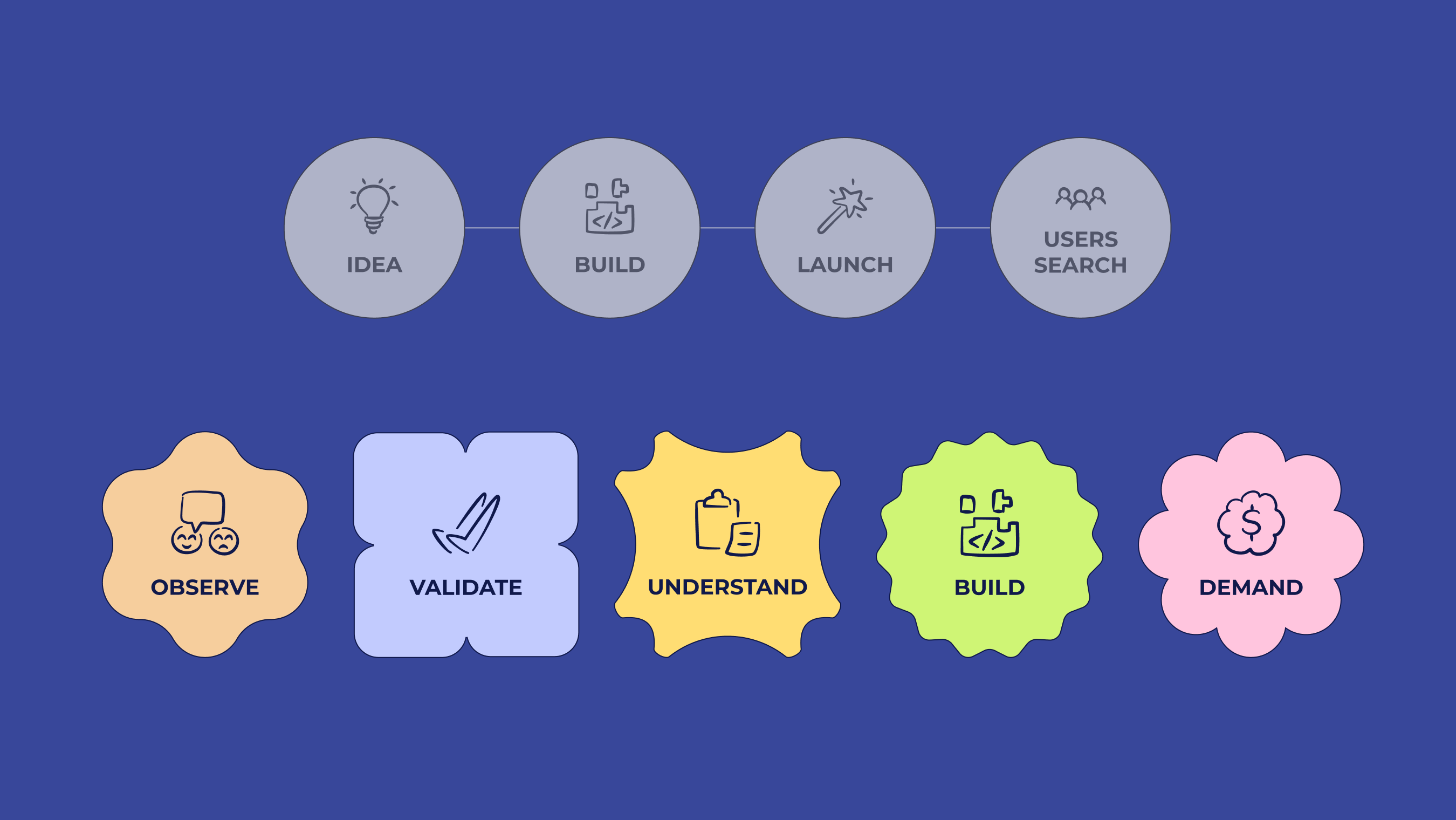
Too many products are built from the inside out: a founder has an idea, builds it, then searches for users who might need it. This approach rarely works.
Before development begins, invest time in understanding your target users deeply. Observe how they currently solve the problem. Are they cobbling together spreadsheets? Managing everything through WhatsApp groups? Tolerating a clunky incumbent solution because nothing better exists?
Real problems create real demand. This is the foundation of product-market fit, and it's non-negotiable.
2. Launch lean with an MVP
The temptation to launch feature-complete is strong. Resist it.
Overbuilt first versions create two problems: they confuse users with too many options, and they delay the feedback loop you need to learn what actually matters.
A well-defined Minimum Viable Product focuses on core value. It gets you to market faster, reduces initial investment, and—crucially—lets you validate assumptions with real users before committing to a full roadmap.
Iteration beats speculation every time.
3. Build with the right team
No successful app is built in isolation.
From strategy and UX design to development, marketing, and compliance, launching an app requires expertise across multiple disciplines. Whether you're working with co-founders, building an internal team, or partnering with a development agency, the key is finding collaborators who take genuine ownership of outcomes.
At Diversido, we operate as an extension of your product team. Our role isn't simply to write code—it's to help you make informed strategic decisions from concept through launch and beyond.
4. Instrument your app from day one
Every feature is a hypothesis. Data tells you whether it holds.
Build analytics into your product from the first release. Tools like Google Analytics 4, Mixpanel, or Firebase allow you to track user flows, identify drop-off points, and understand engagement patterns.
Without instrumentation, you're making decisions blind. With it, you can identify friction, measure impact, and refine the experience based on evidence rather than assumptions.
Don't retrofit analytics later. Build measurement into your foundation.
5. Design for experience, not just functionality
Technical execution matters. But how your app feels to use matters just as much.
Thoughtful design builds trust. Clear information architecture, intuitive interactions, and considered visual language all contribute to an experience that feels professional and reliable.
For apps focused on behaviour change or habit formation, mechanics like progress tracking, streaks, or milestone rewards can be effective—but only when they serve the user's goals rather than manipulating engagement metrics.
You can read more about our approach to designing conversion-focused user experiences here.
6. Plan distribution before you launch
Even exceptional products require a go-to-market strategy.
How will you reach your target users? Through content marketing? Paid acquisition? Influencer partnerships? Community building? Each channel requires different resources and timelines.
For context, user acquisition costs vary widely depending on platform and region. In the UK and Europe, expect to pay anywhere from £1.50 to £3.50 per app install through traditional channels, with costs rising for competitive categories like finance or gaming.
Without an allocated budget and a clear acquisition strategy, even well-built apps struggle to gain initial traction. Distribution deserves the same level of planning as development.
7. Optimise for retention, not just acquisition
Downloads are a vanity metric. Retention is what drives sustainable growth.
The most successful apps create ongoing value that keeps users engaged long-term. Subscription models have become increasingly common for this reason—nearly 44% of iOS App Store revenue now comes from subscription-based apps, particularly in health, fitness, and productivity categories.
Users will pay for consistent value. Build your monetisation strategy around retention from the start.
What separates success from failure
Apps rarely fail because the core idea was flawed. They fail because they were rushed to market without validation, built without focus, or disconnected from genuine user needs.
The path to a successful app is straightforward, if not easy: start with a clearly defined problem, build the minimum solution that addresses it, and refine based on real user feedback.
Everything else follows from there.
Planning your app?
We'd be happy to discuss your idea and help you approach it strategically. Book a free 30-minute consultation
.webp)

