

Building IoT Healthcare Apps: Essential Insights for Startups
Startups building IoT healthcare apps face high-stakes challenges — from compliance and device integration to patient trust and long-term scalability. Here’s what to plan for from day one.
.png)
The Internet of Things is changing healthcare in real ways. Remote patient monitoring, wearable health sensors, and virtual training platforms are just a few examples of how connected solutions are creating new opportunities for startups.
At Diversido, we’ve worked with digital health innovators for over ten years. Building an IoT healthcare app comes with unique challenges in compliance, security, integration, and usability. These are quite different from what you see in most consumer apps.
If you’re a founder or on a product team, keep these points in mind before you start building.
1. Compliance is the Foundation, Not an Afterthought
If you’re building a healthcare app, you can’t afford to treat compliance as an afterthought. Whether you're operating in the US, UK, or Europe, frameworks like HIPAA, GDPR, and NHS standards will directly influence your product from day one — not just your data storage, but your authentication flows, admin controls, and even UI decisions.
Take MindLoop, for example — a cross-platform neurofeedback app we built that connects to EEG headbands. It tracks users’ brain activity in real time to help manage focus, stress, and sleep. Because the app handles sensitive mental health data and provides feedback to both individuals and clinicians, we had to make sure the entire system — from data collection to admin dashboards — was designed to be secure, private, and fully compliant.
The earlier you plan for this, the fewer technical and legal headaches you'll face later.
2. Integrating Devices? Expect Complexity
Getting software to talk to medical hardware is rarely simple. Wearables, sensors, and monitors often run on different communication protocols — Bluetooth, WiFi, proprietary APIs — and integrating them reliably is a challenge, especially in clinical or high-stakes environments.
We saw this firsthand when working on VitalsBridge, a training platform that simulates vital sign changes on connected mannequins using real hospital monitors. The app had to deliver smooth, real-time data communication across mobile and desktop platforms, while syncing accurately with both the mannequin hardware and the training monitor. That meant tight collaboration with the hardware team, careful performance optimisation, and a lot of device testing.
If your app needs to interface with physical devices, don’t leave integration to the last minute. Choose hardware with solid developer support, build in plenty of testing time, and prepare for unexpected edge cases.
3. Great UX Is Critical, Not a Bonus
People with different roles and technical skills use IoT healthcare apps. Patients, clinicians, caregivers, HR teams, and administrators all interact with the system in their own ways.
If the interface is confusing or cluttered, clinicians could miss important alerts. If patient flows are too complex, users might stop using the app. Usability is essential in healthcare.
We focus on making interfaces clear, accessible, and easy to use.
For a deeper look at this topic, see our article How UX/UI Impacts Your Wellness App.

4. Security Is Your Trust Engine
Healthcare IoT apps handle very sensitive personal data. Even a small security issue can break trust and harm your product’s reputation.
You need to build security into your system from the beginning. This means encrypting data in transit and at rest, setting up role-based access, using secure authentication, and regularly monitoring your systems.
Even small features can create risks. For example, push notifications that display health information on a locked screen can accidentally reveal data if not handled carefully.
In healthcare, security is not only about following rules. It is also about earning and keeping user trust.
5. Think Beyond Your MVP
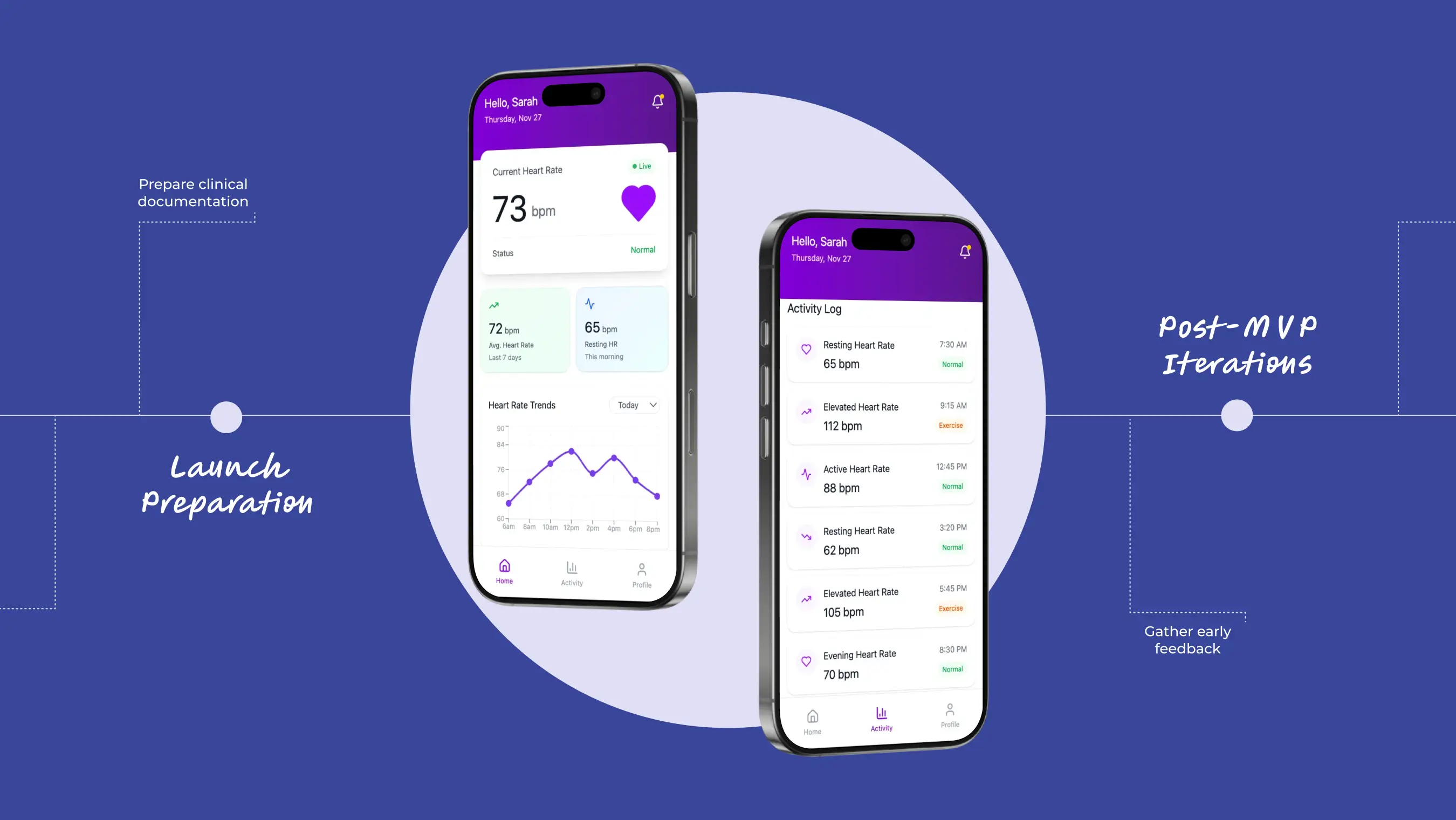
Launching an MVP is a good way to test your idea, but healthcare products require long-term planning. Regulations change, operating systems update, and user needs grow over time.
If your MVP is not designed to scale, it can quickly become a problem when you need to support new devices, connect to other systems, or enter new markets.
In our long-term work with platforms like VitalsBridge, we helped the product grow to support more devices and advanced features, all without major changes to the system. Planning for growth early made this possible.
When planning your roadmap, look beyond launch and get ready for regular updates, maintenance, and growth.
Final Thoughts
Building an IoT healthcare app is both challenging and rewarding. You need technical skills, a clear understanding of compliance and security, and a strong focus on user needs.
Startups that tackle these challenges early are more likely to deliver real value and stand out in the competitive healthcare market.
At Diversido, we have been building healthcare and wellness solutions since 2013. We help startups turn complex ideas into secure, scalable products, from connected training systems and mental health platforms to apps with wearable integration.
If you are looking for a technical partner with healthcare IoT experience, take a look at our portfolio or book a free intro call.
.png)